
Blogs
Why Motor Technology Is Important in Drones
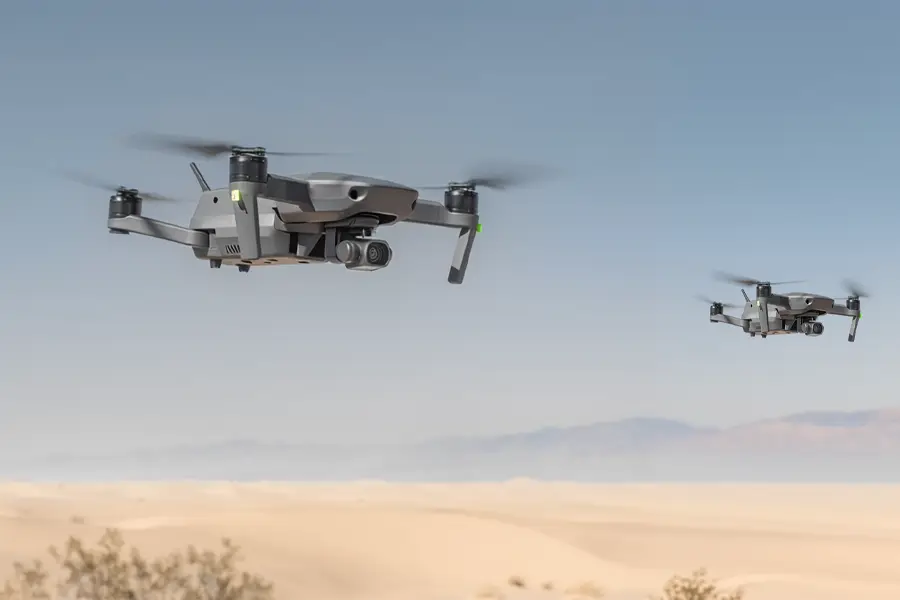
Why Motor Technology Is Important in Drones In our previous blog, we examined the main types of motors used in drone systems. In this article, we explore why motor technology is important to drone performance, including its impact on thrust, efficiency, and thermal behavior. Download our engineering guide to motors for drone systems to learn…
Read MoreAI-Enhanced Robotics: Powering the Semiconductor Backbone of Intelligent Automation
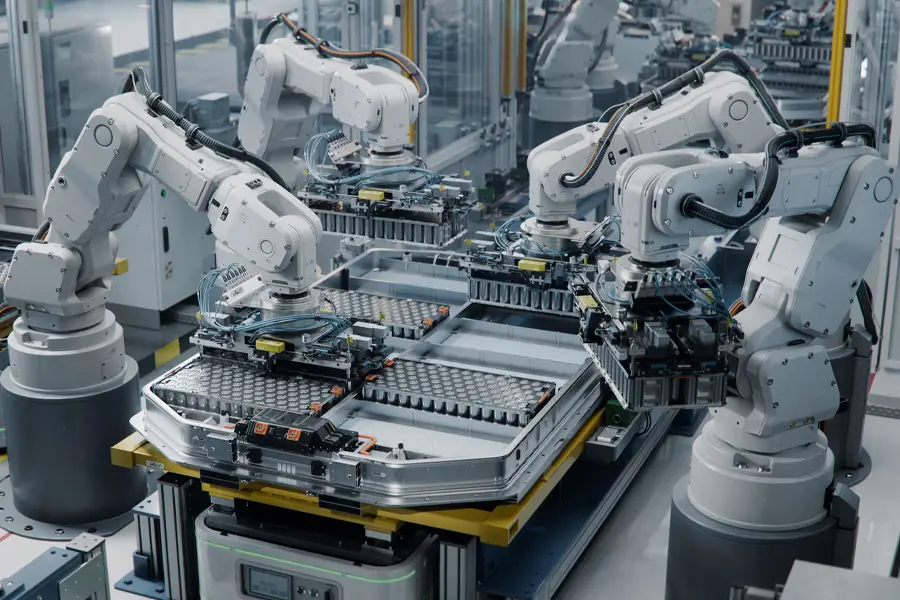
AI-Enhanced Robotics: Powering the Semiconductor Backbone of Intelligent Automation AI-enhanced robotics are moving from controlled pilot environments into full industrial deployment. Machine learning, real-time vision systems, adaptive path planning, and edge processing are redefining what robots can do, and how flexibly they can do it. These next-generation platforms are no longer executing rigid routines, they…
Read MoreMulti-Axis Motion Control for Industrial Automation: More Axes, More Problems?
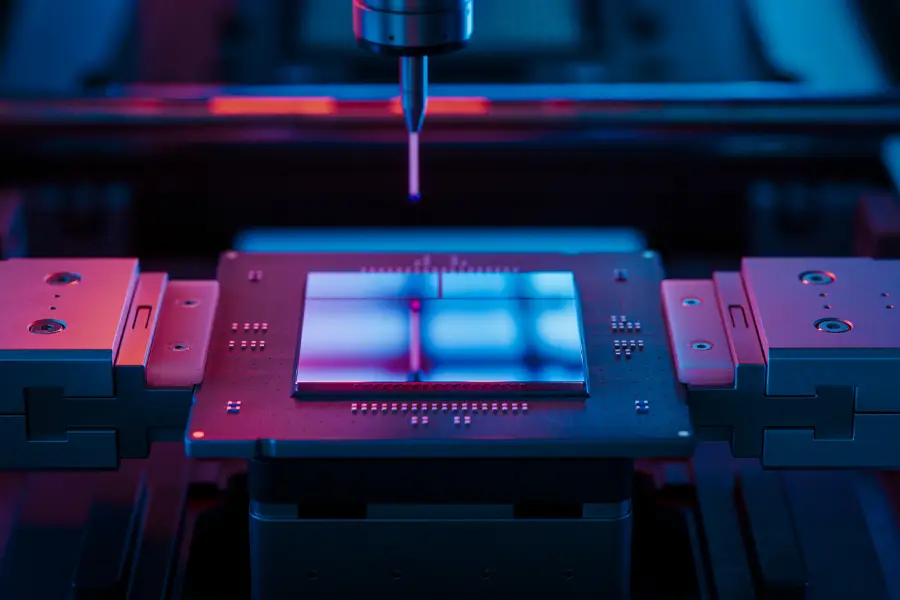
Multi-Axis Motion Control for Industrial Automation: More Axes, More Problems? As industrial automation evolves to meet rising demands for speed, flexibility, and precision, motion control systems must do far more than simply “move.” They must deliver coordinated motion across multiple axes (often in six degrees of freedom or more) with nanometer- to micron-level precision, rock-solid…
Read MoreThe Motion Control Challenge in AR/VR Lens Production

The Motion Control Challenge in AR/VR Lens Production Augmented reality (AR) and virtual reality (VR) are transforming industries, from gaming and education to medical training and advanced manufacturing. But behind every immersive experience lies a foundation of extreme optical precision. The quality of an AR/VR device depends on the flawless alignment of its lenses. Even…
Read MoreMotion Control for Sub-Micron Micro-Printing: The Hidden Enabler of Next-Generation Micro-Fabrication
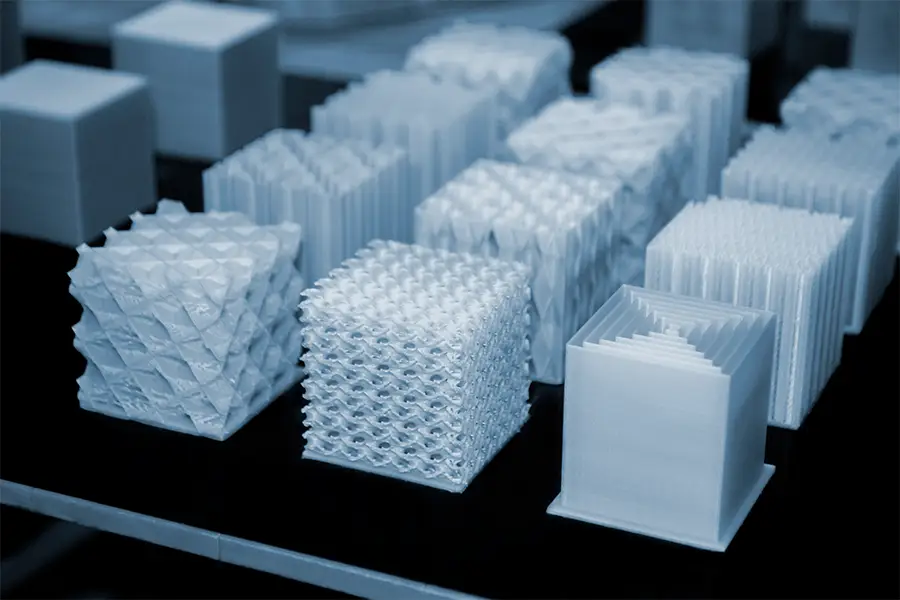
Motion Control for Sub-Micron Micro-Printing: The Hidden Enabler of Next-Generation Micro-Fabrication Additive manufacturing is often associated with fractional millimeter-scale components or polymer prototyping. Yet at the opposite end of the spectrum, a new generation of micro-printing technologies is emerging that operates at resolutions measured in microns, or even below. Among the most promising approaches are…
Read MoreThe Growing Need for Motion Control in AI Manufacturing

The Growing Need for Motion Control in AI Manufacturing Artificial Intelligence is no longer just a software revolution, it’s rapidly becoming a hardware one as well. Behind every breakthrough in machine learning or generative AI lies a backbone of advanced semiconductor hardware, GPUs, ASICs, neuromorphic processors, and optical interconnects. As demand surges, the pressure to…
Read MoreMotion Control and Nano Imprint Lithography (Where Nanometers Matter Most)
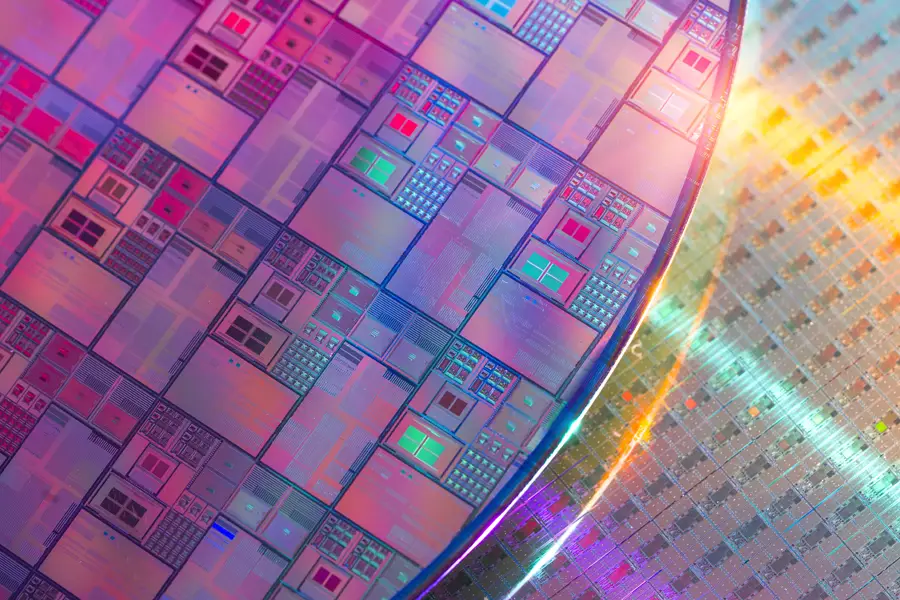
Motion Control and Nano Imprint Lithography (Where Nanometers Matter Most) Nano imprint lithography is the cutting edge of high-resolution microfabrication, a technique where the smallest tolerances, finest features, and most demanding motion control requirements converge. In this environment, one thing is clear, conventional motion systems simply cannot deliver. At the heart of nano imprint lithography…
Read MoreWhy EV Battery Production Relies on High-Speed Precision Motion

Why EV Battery Production Relies on High-Speed Precision Motion The global surge in electric vehicle (EV) adoption has placed immense demand on battery manufacturers. To meet ambitious climate goals and consumer expectations, factories must produce more batteries, at higher speeds, without sacrificing quality or consistency. It’s a tall order. And the unsung hero enabling this…
Read MorePhotonics for Energy-Efficient Data Centers: Why Precision Motion Will Be the Unsung Hero

Photonics for Energy-Efficient Data Centers: Why Precision Motion Will Be the Unsung Hero The world’s insatiable appetite for data has turned data centers into energy-consuming giants. With the growth of AI, cloud computing, and streaming, these facilities face a dual challenge, they must dramatically scale their processing capabilities while also reducing their environmental impact. And…
Read MoreEvolution of Precision: From Stewart Platforms to Hybrid Hexapods
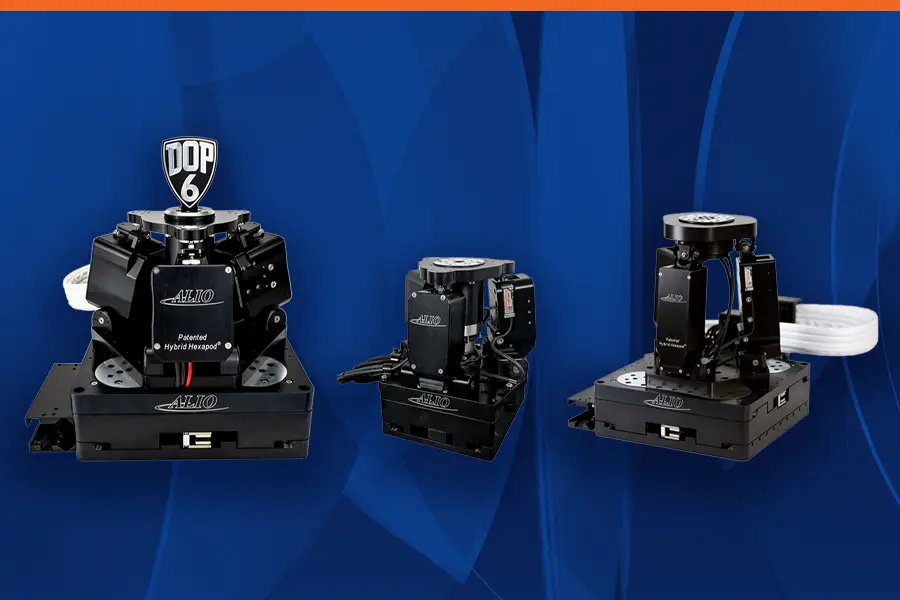
Evolution of Precision: From Stewart Platforms to Hybrid Hexapods While the traditional Stewart platform has long been the standard for achieving six degrees of freedom (6-DOF) in applications ranging from flight simulation to precision manufacturing, its parallel kinematic design often suffers from limited yaw rotation, accumulated motion errors, and a lack of passive stiffness. The…
Read More