
Selecting the Right Motor for Humanoid Applications
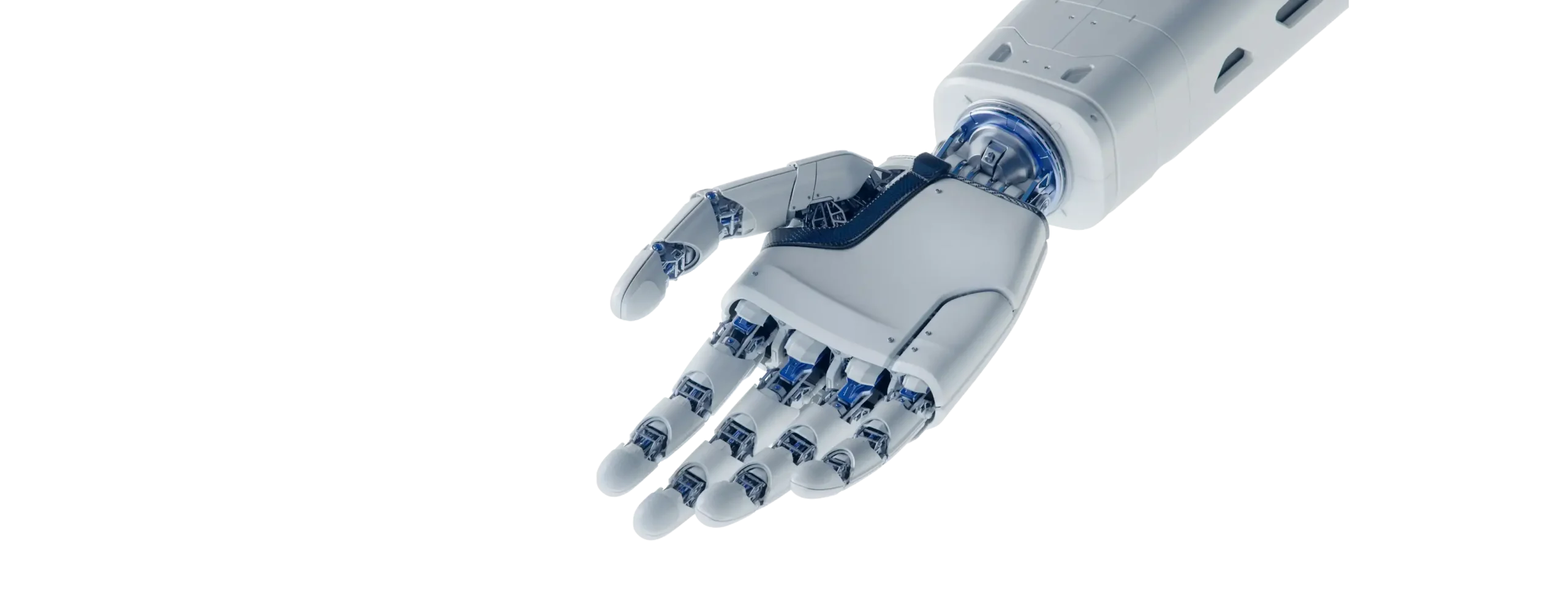
In our previous humanoid blog, we explored the critical motor performance parameters in humanoids. This article examines how motor selection is shaped by application-specific and joint-level requirements across different humanoid robot configurations, reflecting how actuators must operate under continuous, dynamic, and thermally constrained conditions.
For additional guidance on selecting motors for humanoid applications, download our selection guide to motors for humanoid robotic systems here.
Motor selection should not be based on peak performance alone, as actuators operate under continuous, dynamic, thermally constrained conditions. In humanoid systems, motors must operate as continuously active components within a full-body system where loads vary in real time due to motion, balance correction, and external disturbances.
Different joints within the robot impose different requirements, leading to different motor architectures across the system.
Joint-Based Humanoid Motor Requirements
Load-bearing axes such as hips and knees require high continuous torque capability and strong thermal robustness to support sustained mechanical loading. These joints operate under higher structural demands, which drives the need for high-torque, thermally optimised slotted designs for heavier joints.
In contrast, joints such as wrists, neck, and ankles prioritise smooth torque production, low acoustic noise, and precise motion control. In these applications, minimising cogging torque is critical to achieving stable and repeatable motion, making slotless motor architectures suitable for precision-focused axes.
Humanoid Motor Operating Behaviour
Motor selection also needs to consider full-system operating behaviour rather than isolated joint performance. Humanoid robots operate under continuously changing conditions where multiple joints interact simultaneously, and loads shift dynamically across the system. The motor must maintain consistent performance during system-level balance correction and in the presence of external disturbances. This requires stable behaviour under real-time changes in force, motion, and joint interaction.

Humanoid Motor Selection Principles
Motor selection decisions should be guided by system-level actuator behaviour within a continuously active system rather than as an isolated component. This means evaluating performance in the context of real operational conditions rather than standalone specifications. In humanoid applications, this system-level approach ensures that motors remain stable and responsive under continuous dynamic operation.
Download our selection guide to motors for humanoid robotic systems, or get in touch to discuss your humanoid robotics application with our engineers.