
Key Engineering Considerations for SATCOM Motors
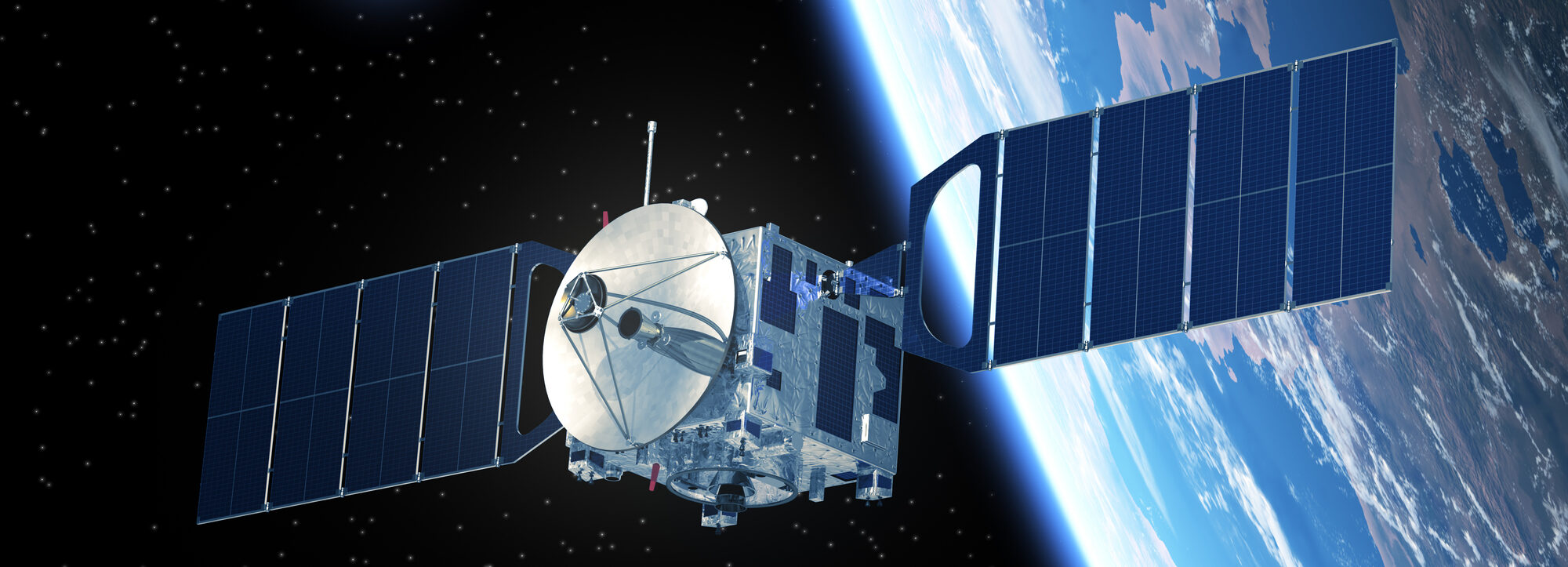
The growth of Low Earth Orbit (LEO) constellations and increasing demand for connectivity across ground, airborne, maritime and space-based systems are placing new demands on SATCOM motion technology. Applications are becoming more dynamic, while engineers continue to face pressure to improve performance within demanding size, weight, power and environmental constraints.
Selecting the right motor therefore requires more than comparing torque and speed. Pointing accuracy, reliability, integration and the operating environment can all influence motor selection and long-term system performance.
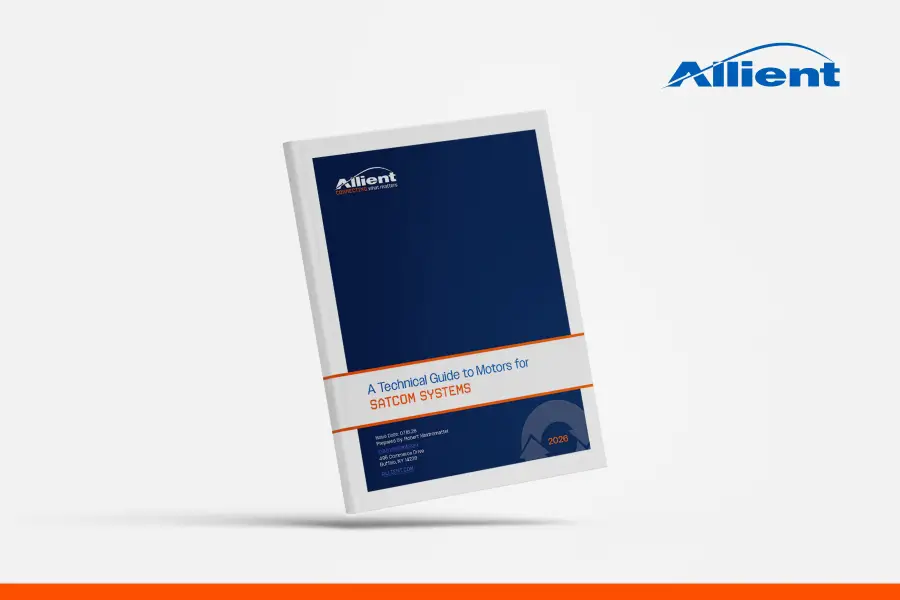
For a more detailed overview of motor technologies, applications and selection considerations, download our Technical Guide to Motors for SATCOM Systems.
Key Factors to Consider
The requirements placed on a motor can vary significantly from one SATCOM application to another. A ground tracking antenna, mobile terminal and space-based system each present different motion, integration and environmental challenges. Understanding these requirements early in the design process is important when selecting the right motor technology for the application.
While every system is different, there are several key engineering considerations that commonly influence motor selection.
Pointing Accuracy
Accurate and repeatable positioning is fundamental to SATCOM performance. Ground antennas must acquire and track satellites as they move across the sky, while mobile terminals need to maintain a reliable link as both the platform and satellite are moving.
The requirements can become even more demanding in space-based systems. Satellite pointing mechanisms, payloads and optical communication terminals may require extremely precise motion to establish and maintain communication links.
Performance
Torque and speed remain important considerations, but motor performance needs to be evaluated in the context of what the application actually requires.
A ground-based tracking antenna, for example, has very different motion requirements from a reaction wheel assembly or an inter-satellite optical communication system. Responsiveness and the operating conditions all need to be considered alongside headline motor specifications when determining the most appropriate solution.
Reliability
Reliability is particularly important in SATCOM applications designed for long service or mission lifetimes.
For motors deployed in space, the requirements are especially demanding. Once a satellite is in orbit, opportunities for maintenance or repair are extremely limited or may not exist at all. Long-term reliability therefore needs to be considered from the beginning of the design process.
Integration
SATCOM systems are becoming smaller, lighter and more integrated, placing greater emphasis on how the motor fits within the wider mechanical system.
Motor selection therefore needs to consider more than whether a solution physically fits within the available space. Packaging, mechanical architecture and integration with the wider motion system can all influence the final design. In some applications, direct-drive and frameless motor technologies can help reduce mechanical complexity by integrating the motor directly into the positioning mechanism.
Space Environment
Motors operating in space face challenges that are not present in conventional terrestrial applications. Vacuum, radiation and repeated thermal cycling can all influence motor design and the selection of suitable materials.
Lubrication also requires careful consideration, as solutions need to be appropriate for the operating environment. These factors need to be addressed early in development, particularly for systems expected to operate reliably throughout long mission lifetimes.
Operating Environment
Environmental requirements are not limited to space. Ground, airborne and maritime SATCOM applications each present different engineering challenges.
Depending on the application, motors and motion systems may need to operate in conditions involving vibration, corrosion and temperature extremes. Understanding the operating environment from the outset is therefore an important part of selecting and designing the right motor solution.
Selecting the Right Motor for the Application
There is no single motor technology that is right for every SATCOM system. The requirements of a ground tracking antenna can be very different from those of a mobile terminal, satellite pointing mechanism or reaction wheel assembly.
Successful motor selection starts with understanding the application and balancing pointing accuracy, performance, reliability, integration and environmental requirements. Working with engineers who understand SATCOM and space applications can also help identify potential challenges earlier in development and determine whether a standard motor can meet the requirements or a custom solution is needed.
Download our Technical Guide to Motors for SATCOM Systems for a more detailed look at SATCOM motor technologies, engineering considerations and motor selection.
If you need support selecting the right motor for your SATCOM application, contact Allient to speak with a Solutions Engineer.