
Multi-Axis Motion Systems: The Most Dangerous Error May Be on the Axis You Never Commanded
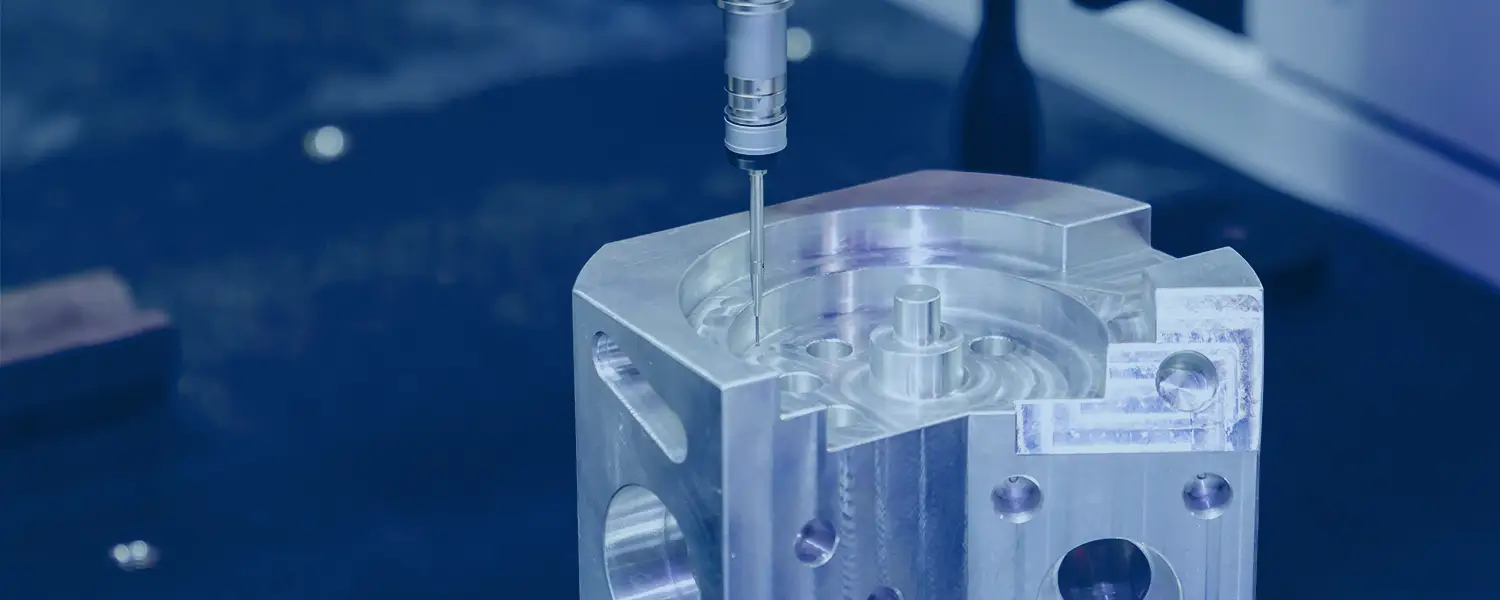
In a multi-axis precision system, commanding X does not guarantee that only X moves.
The structure can pitch. It can yaw. One axis can distort another. A motor can introduce force through the wrong part of the structure. A beautifully repeatable encoder position can coexist with a work point that has moved somewhere else entirely.
For applications such as semiconductor hybrid bonding, wafer metrology and photonics alignment, that distinction is critical.
Take hybrid bonding. Two surfaces must be positioned relative to one another with exceptional precision before contact occurs. X and Y positioning matter, but so do Z, pitch, roll, and yaw. If the XY architecture lacks stiffness, acceleration can disturb alignment. If the axes are not genuinely orthogonal, movement in one direction creates error in another. And if angular motion is ignored, a tiny rotation can become a significant linear displacement at the actual bonding point.
This is why Allient approaches multi-axis motion systems as a geometric problem, not simply an exercise in stacking stages.

Monolithic XY architecture is a major part of that philosophy. By designing the planar axes as an integrated mechanical structure, stiffness and orthogonality can be engineered into the platform rather than recovered later through a collection of interfaces, brackets, and compensation tables. Allient's monolithic XY products are specified not just for linear accuracy and repeatability, but also straightness, flatness, pitch, yaw, roll, and orthogonality.
Motor placement and force paths matter too. Where actuators are positioned influences how forces travel through the structure. Thoughtful placement can reduce unwanted coupling between axes and help the machine respond as intended during highly dynamic movement.
But the deeper differentiator is knowing what to measure.
Allient's 6D approach recognises that motion occurs in three-dimensional space. Linear positioning alone cannot describe what happens at the real process point. Straightness, flatness, and angular errors must also be understood across travel. That is the basis of Allient’s Point Precision® philosophy and 6D Nano Precision® methodology.
For wafer inspection, that may mean keeping a focus sensor within its usable range across an entire wafer. For photonics, it can mean maintaining the relationship between fibre, lens and detector as multiple axes move. For hybrid bonding, it means preserving alignment until the moment the process occurs.
The real test of a multi-axis system is therefore not how impressive each axis looks independently.
It is whether the point that matters stays where the process expects it to be.