
Where Motors Are Used in Drones
The drone market is rapidly evolving as new technologies and applications continue to emerge. In today’s blog, we explore some of the main applications for motors in drone systems.
For a more in-depth overview, you can download our engineering guide to motors for drone systems here.
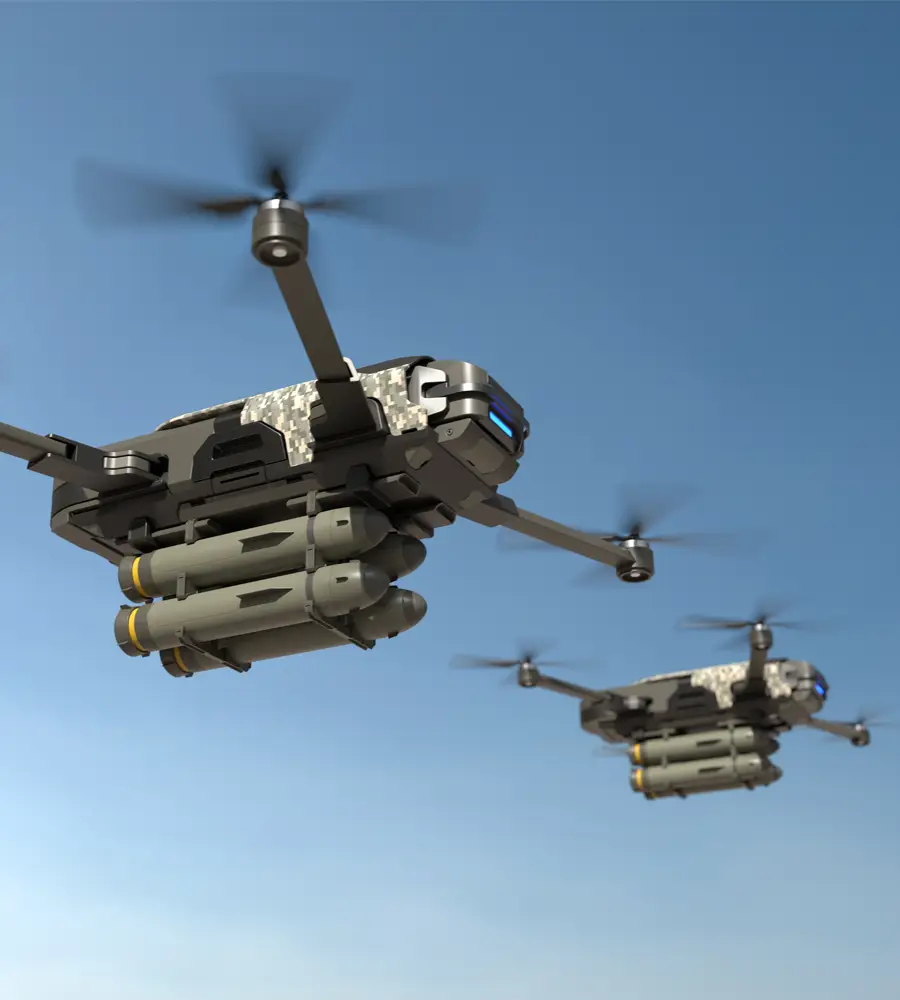
Motors are used throughout a drone system, serving both propulsion and precision motion functions. While propulsion motors are typically the most visible elements of the aircraft, multiple motor systems operate within a UAV to support flight, stabilization, and auxiliary mechanical tasks. Their placement and operating characteristics contribute to overall aircraft behavior under real operating conditions.
Propulsion Motors in Drone Systems
In propulsion systems, motors generate thrust for lift, hovering, climb, and forward flight. Electrical power is converted into rotational motion, driving the propeller to produce aerodynamic force. Multirotor platforms typically rely on dedicated lift motors positioned around the airframe. These drone motors operate continuously during flight and contribute not only to vertical thrust generation, but also to aircraft attitude control through controlled variations in rotational speed.
Fixed-wing and hybrid VTOL designs may incorporate separate motors optimized for cruise efficiency rather than static lift. In fixed-wing configurations, propulsion motors often operate at relatively steady speeds during forward flight. Hybrid VTOL platforms combine vertical lift capability with forward-flight efficiency, commonly using dedicated lift motors for takeoff and landing alongside a separate propulsion motor for cruise.
Some platforms use tilting or re-orienting motor assemblies to transition between vertical and horizontal flight. These architectures introduce additional mechanical and control considerations, as motors may experience changing aerodynamic loads during transition between flight modes.
Gimbal and Auxiliary Motor Applications
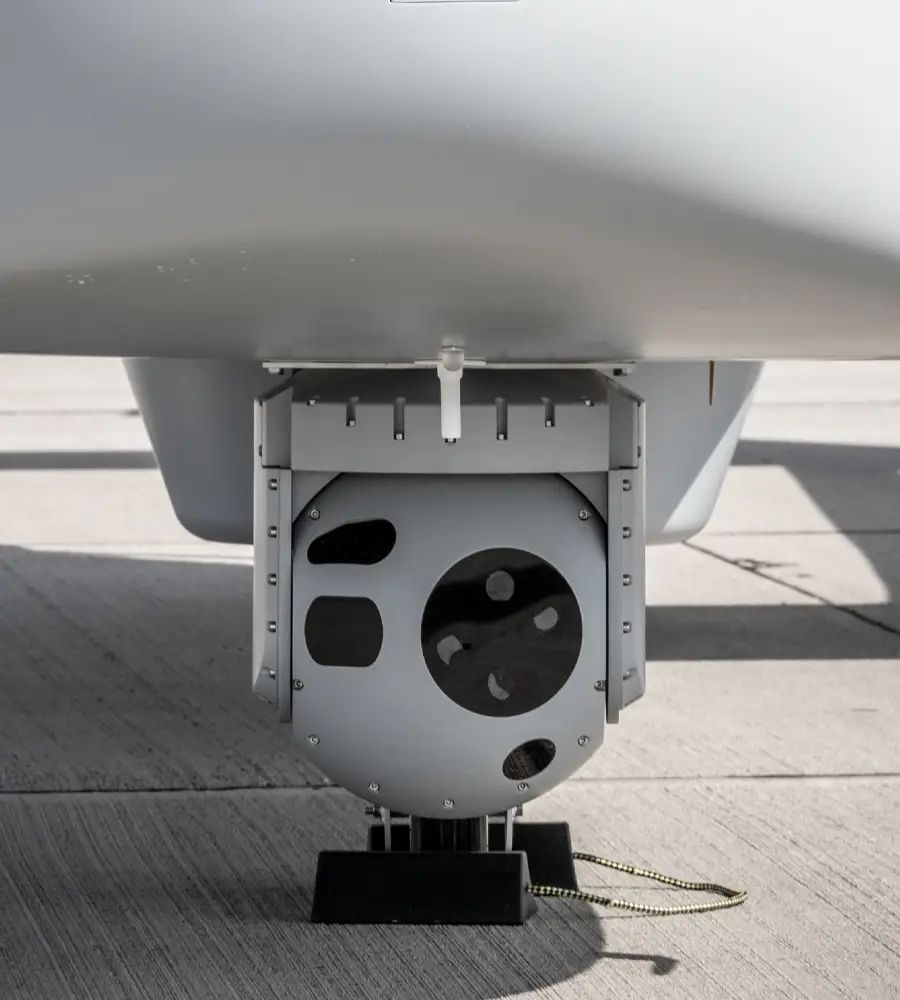
Beyond propulsion, motors play a critical role in gimbals and payload positioning systems. Cameras, radar, LiDAR, and other sensors must be stabilized and accurately positioned, often under dynamic flight conditions. Even minor disturbances can influence sensor output or image stability.
Gimbal motors in stabilization applications typically require:
- Smooth torque output
- Low cogging
- Rapid acceleration
- Precise control
Additional motors may also be used for control surfaces, landing gear, or mission-specific mechanisms. In fixed-wing platforms, motors actuate ailerons, elevators, rudders, and flaps to translate control inputs into aerodynamic adjustments. Landing gear systems and other auxiliary mechanisms may operate intermittently but must function reliably under environmental conditions typical of UAV operation.
Download our engineering guide to motors for drone systems or get in touch today to discuss your drone application with one of our experts.