
Motor Technologies Used in Humanoids

In a previous blog, we highlighted where motors are used in humanoids. In this article, we explore the motor technologies commonly used in humanoid robotic systems and the performance characteristics that influence actuator selection across different joints and joint function.
Download our selection guide to motors for humanoid robotics systems to learn how to select the right motor for your application here.
Humanoid robotic systems typically use a combination of motor technologies depending on joint function. Different actuator architectures are selected based on requirements such as torque density, smoothness of motion, and controllability.
High Torque Density Motors
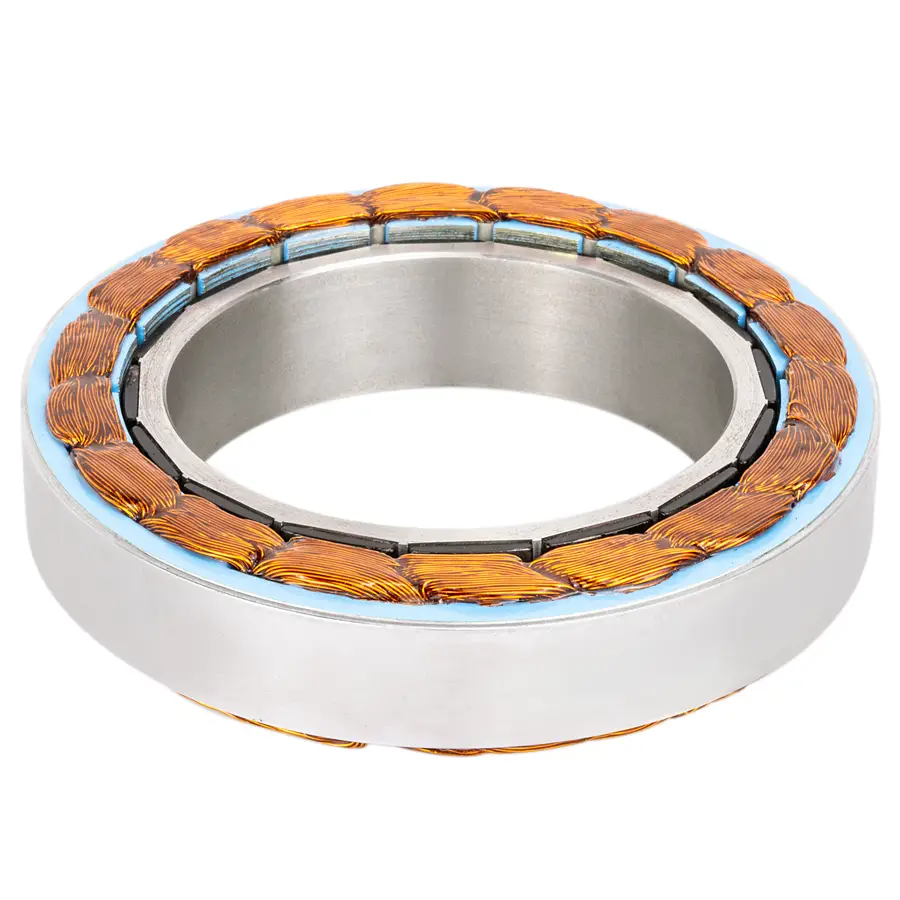
High torque density motors are used in humanoid applications where compact size and high output requirements must be balanced carefully. Because humanoid joints operate within limited space constraints, actuator size, weight, and efficiency are important considerations.
Frameless motor designs are often integrated directly into joints to reduce weight and improve mechanical efficiency.
Slotless Motors
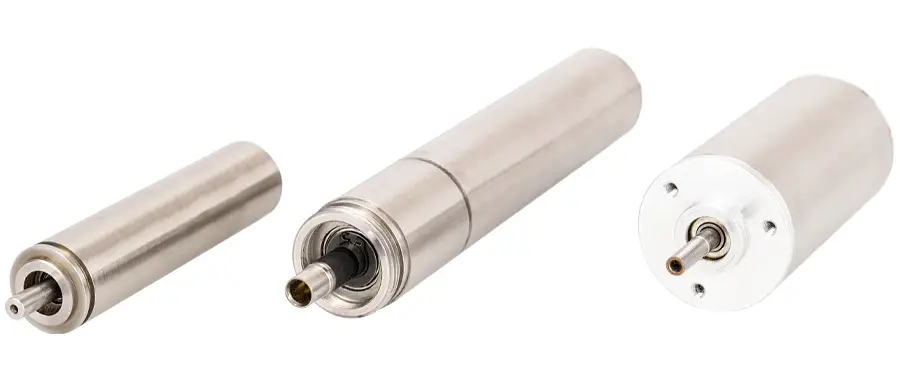
Slotless motors are commonly used in joints where smooth, organic motion is required.
Traditional slotted motors contain magnetic attractions and interaction between the rotor and stator, which can introduce disturbances to motion smoothness during operation.
When using a slotless or air-core motor, this magnetic attraction is removed, resulting in smoother motion characteristics.
Gear Reduction Systems
Gear reduction systems are used to increase torque output while shaping the joint’s controllability and mechanical impedance.
Different gearbox architectures such as cycloidal, harmonic, and planetary each introduce distinct trade-offs in backdrivability, precision, efficiency, friction, and impact resistance.
Direct-Drive Configurations
Direct-drive configurations connect the motor directly to the joint output without using a gearbox.
These systems provide smooth torque output and high backdrivability, enabling natural interaction and precise stability control. With no gearbox friction or compliance, they offer high torque fidelity, rapid disturbance response, and low mechanical impedance for safe, responsive motion.
Balancing Actuator Trade-Offs
Each motor technology used in humanoid robotics involves trade-offs between torque density, control precision, mechanical complexity, and system integration constraints.
As a result, humanoid robotic systems often combine multiple actuator technologies depending on joint function.
Download our selection guide to motors for humanoid robotics systems or get in touch to speak with an engineer about your humanoid robotics application.