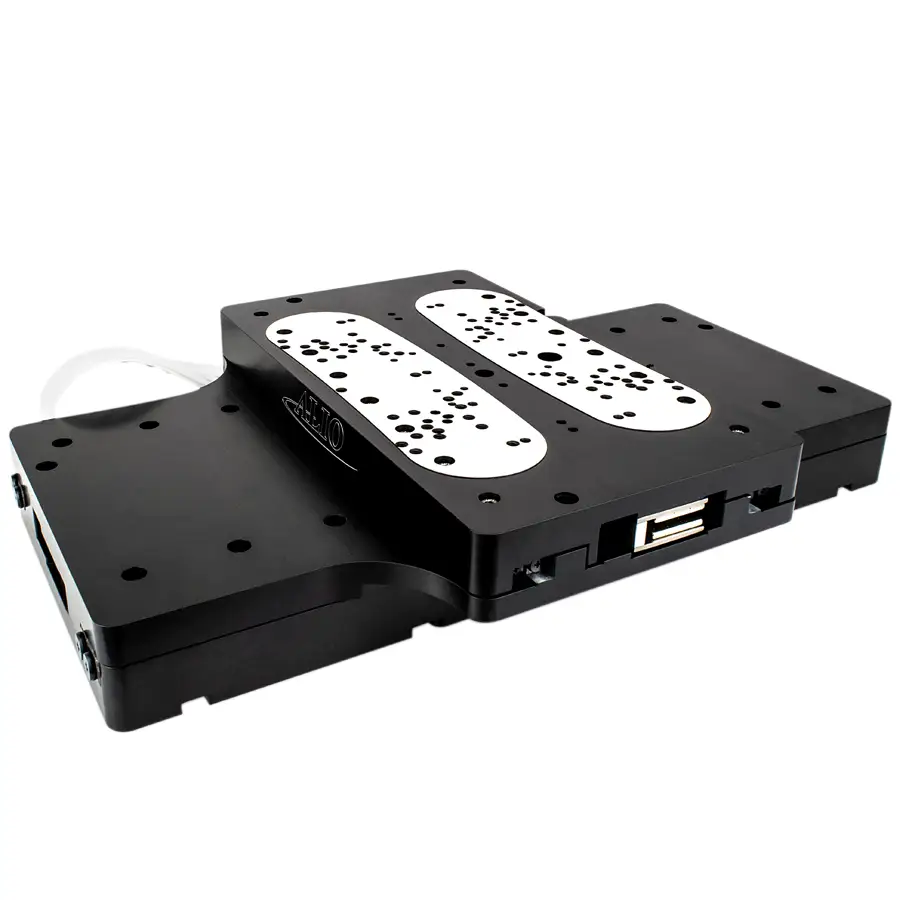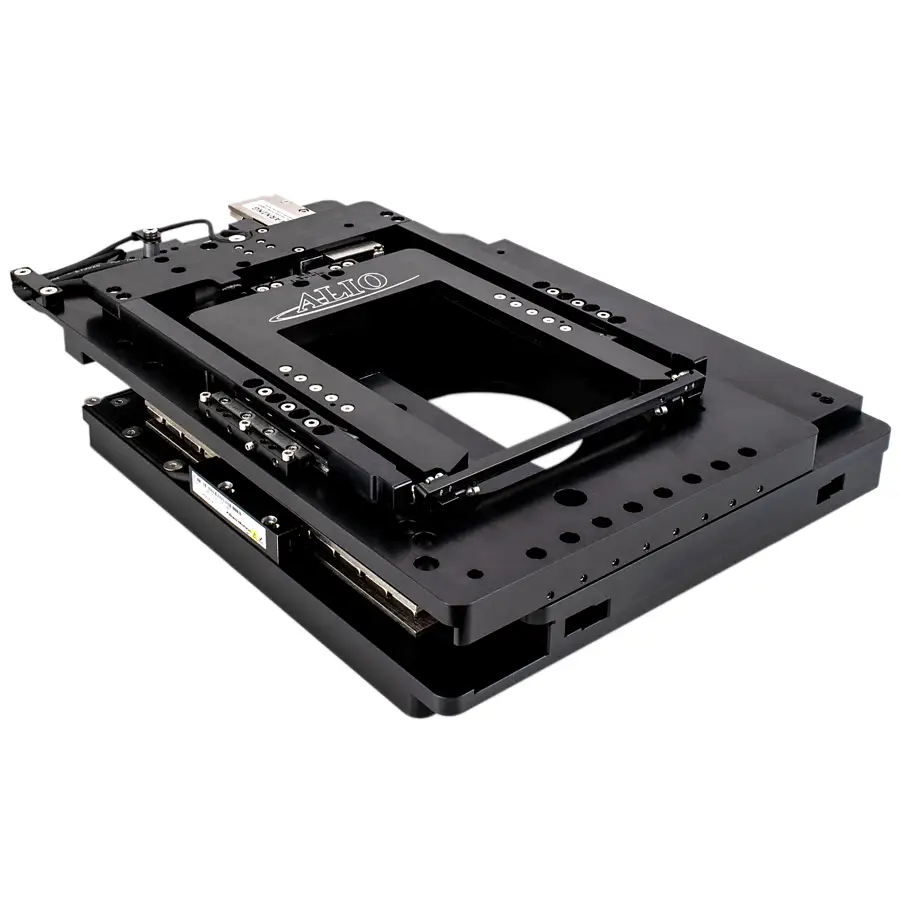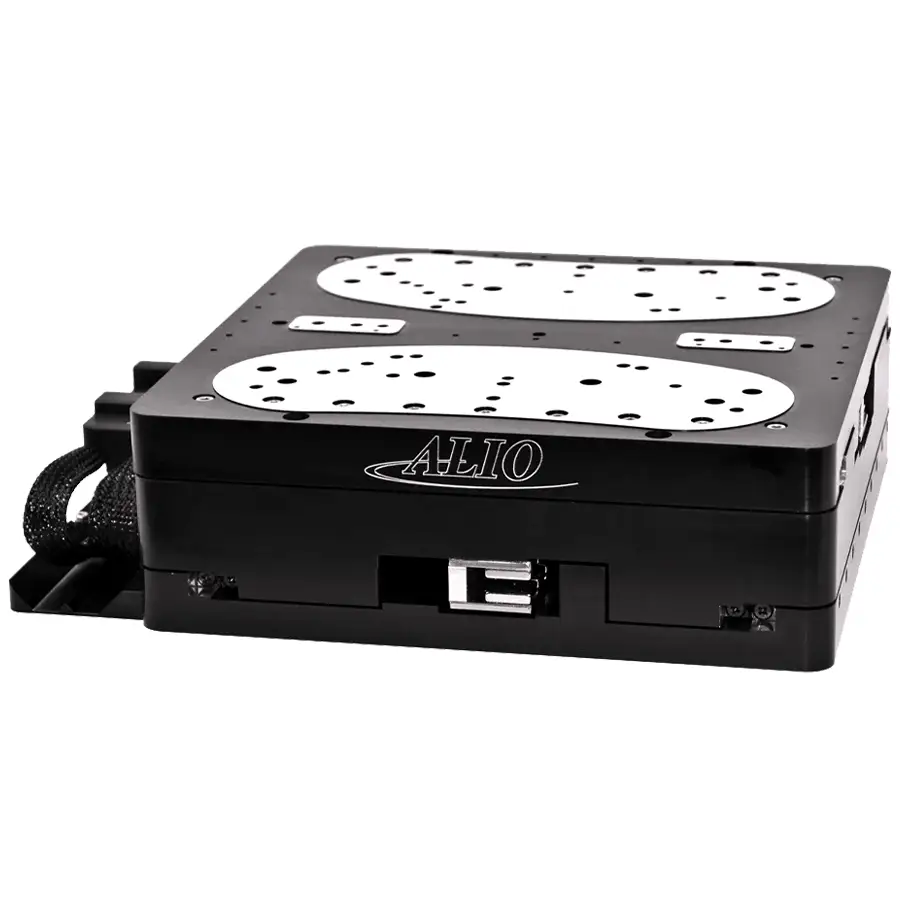
Motion Control and Nano Imprint Lithography (Where Nanometers Matter Most)

Nano imprint lithography is the cutting edge of high-resolution microfabrication, a technique where the smallest tolerances, finest features, and most demanding motion control requirements converge. In this environment, one thing is clear, conventional motion systems simply cannot deliver.
At the heart of nano imprint lithography lies the precise positioning and alignment of lithography masks or optical components, often used to imprint or expose nanostructures on semiconductor wafers or micro-optical elements. As feature sizes shrink and overlay tolerances tighten, the demands placed on motion control systems become exponentially more stringent.
What Is Nano Imprint Lithography?
Nano imprint lithography refers to the precise application of lithographic processes using nanometer-scale imprint patterns, whether from masks, light patterns, or direct-write systems. These patterns are used to define the geometry of integrated circuits or other nanoscale structures. Unlike traditional photolithography, nano imprint lithography pushes beyond diffraction-limited resolutions and requires ultra-precise component handling to prevent any mechanical-induced error.
Why Motion Control Matters
While the light source or mask might be the headline technology, it’s the motion platform that often determines whether the system performs at specification. Any deviation, vibration, or positional drift during exposure can translate into catastrophic patterning errors.
Key motion challenges in nano imprint lithography are multifaceted and unforgiving. Achieving sub-micron repeatability demands that every movement (across every axis) is tightly controlled within nanometer-level tolerances. True precision also relies on the ability to synchronize multiple axes simultaneously, including X, Y, Z, pitch, roll, and yaw, without introducing positional errors.
In parallel, minimizing all vibration is essential. Resonance and mechanical vibration can distort exposure profiles during critical processing steps. Additionally, cross-talk and mechanical coupling between axes (particularly in hybrid or parallel-kinematic systems) can quickly erode accuracy. Allient addresses these concerns through designs that prioritize stiffness, and by using state of the art third party drives and controls that deliver superior algorithms for reducing transient vibration and optimizing coordinated multi-axis motion.
Allient’s Leadership in Nano-Precise Motion
Allient has been engineering motion platforms for nano-scale applications for over two decades and nowhere is this expertise more critical than in nano imprint lithography.
Our approach is built on three core principles that differentiate our motion systems at the highest levels of performance. First, architectural rigidity is paramount. Every stage is designed to resist deflection and vibration across its full travel range, with stiffness engineered into monolithic frames, bearing selection, and structural components.
Applications in Semiconductor and Optoelectronics
Nano imprint lithography is increasingly being adopted in advanced semiconductor packaging, wafer-level optics, and emerging fields like quantum computing and integrated photonics. These applications demand motion systems that not only meet today’s standards but are future-proofed for next-generation requirements.
Why Allient?
From our purpose-built facility (featuring temperature and vibration isolated test areas), to our vertically integrated machine shop, and our know-how of and partnership with suppliers of world class servo drives and controls, Allient delivers precision built for you. Our platforms are used by some of the world’s most innovative lithography system manufacturers, because we don’t just promise precision. We guarantee it.