Micron-Level Motion Systems: When “Good Enough” Precision Still Demands Serious Engineering
A micron sounds generous until it becomes the difference between a usable image and a blurred one, a detected wafer defect and a missed one, or a laser pulse landing exactly where intended and landing somewhere else.
That is why micron-level motion systems should never be treated as simply lower-specification versions of nanometer stages.
Consider a high-throughput wafer-inspection or automated imaging platform. The payload may range from a substantial wafer chuck and fixturing to an extremely lightweight optical element. The XY axes may need to move continuously while Z maintains focus and a camera, laser, or galvo performs a process at precise locations. Add vibration, heat generation, and repeated acceleration, and a nominally straightforward micron-level requirement quickly becomes a system-engineering problem.
Motor selection is an important part of the answer. For demanding payloads and high-duty cycles, a high Motor Constant can provide more force for a given thermal penalty, or the required force with less resistive heating. That matters because heat does not remain conveniently inside the motor; it can become thermal drift elsewhere in the machine.
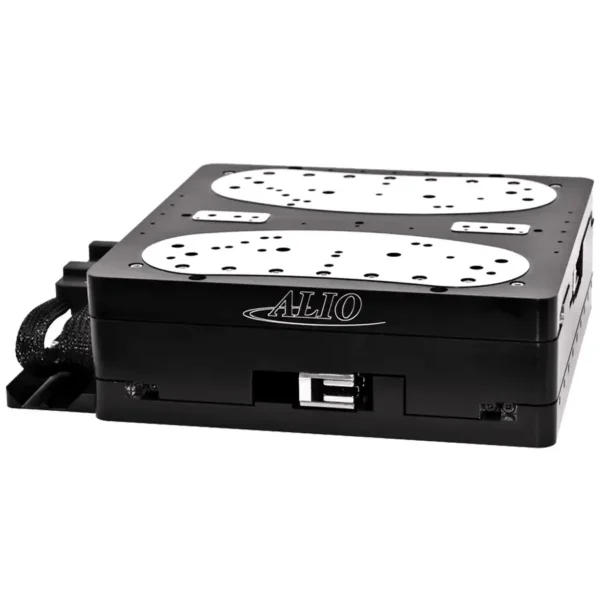
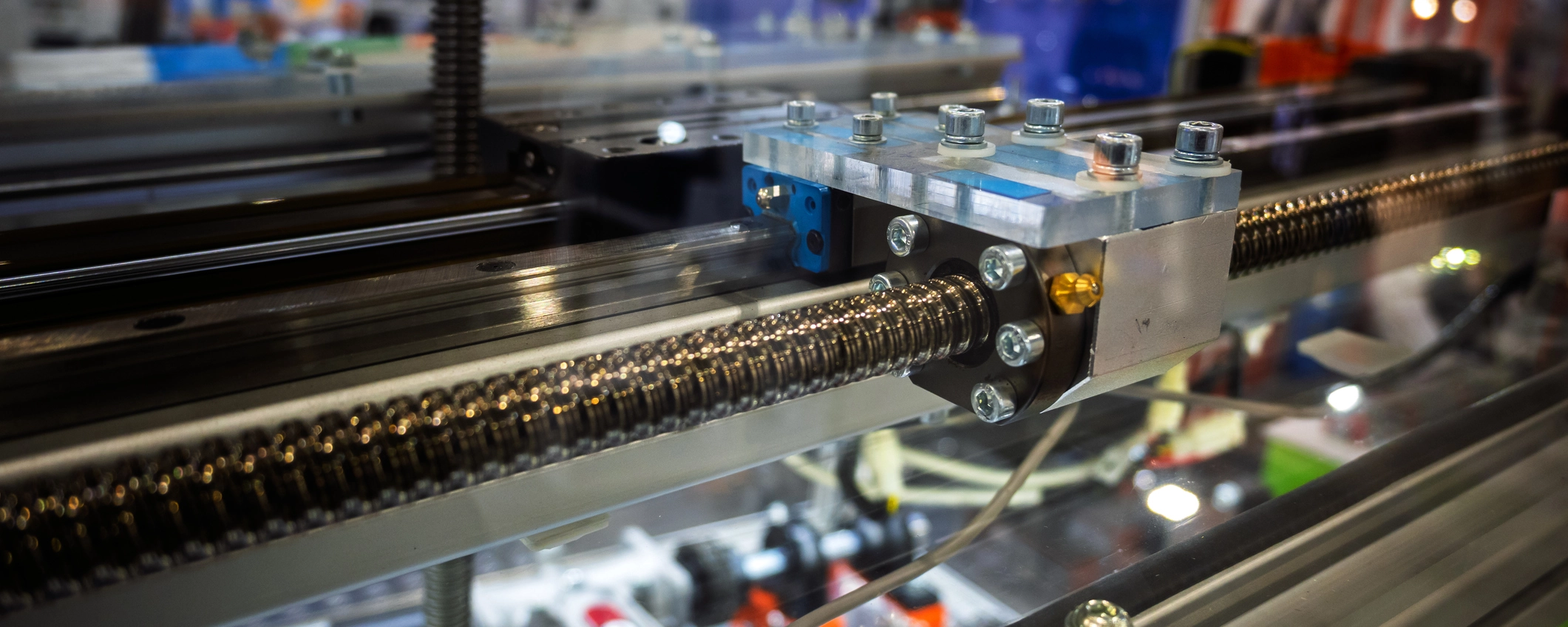
Mechanical architecture matters just as much. Allient's monolithic XY stages provide a stiff, geometrically controlled platform where orthogonality and dynamic stability matter. Where applications require substantially longer travel, Allient’s Micron 2 family uses recirculating ball-rail architectures, with standard options extending from 100 mm into metre-scale travel.
Then there is synchronization.
In an inspection system, accuracy is of little value if the camera fires between the positions that matter. In fluorescence or laser-based imaging, XY position, Z focus, and galvo activity may all need to be coordinated. Position Event Generation enables process devices such as cameras and lasers to be triggered directly from encoder position, removing much of the uncertainty associated with software-timed events.
Finally, the stage cannot be considered in isolation. Granite bases, engineered frames, integrated XYZ architectures, system tuning, and verification and validation under realistic payloads are what turn individual components into a dependable machine.
That is the Allient approach to micron-level motion, not chasing a specification for its own sake, but engineering the level of precision, travel, dynamics, and stability the application actually needs.